


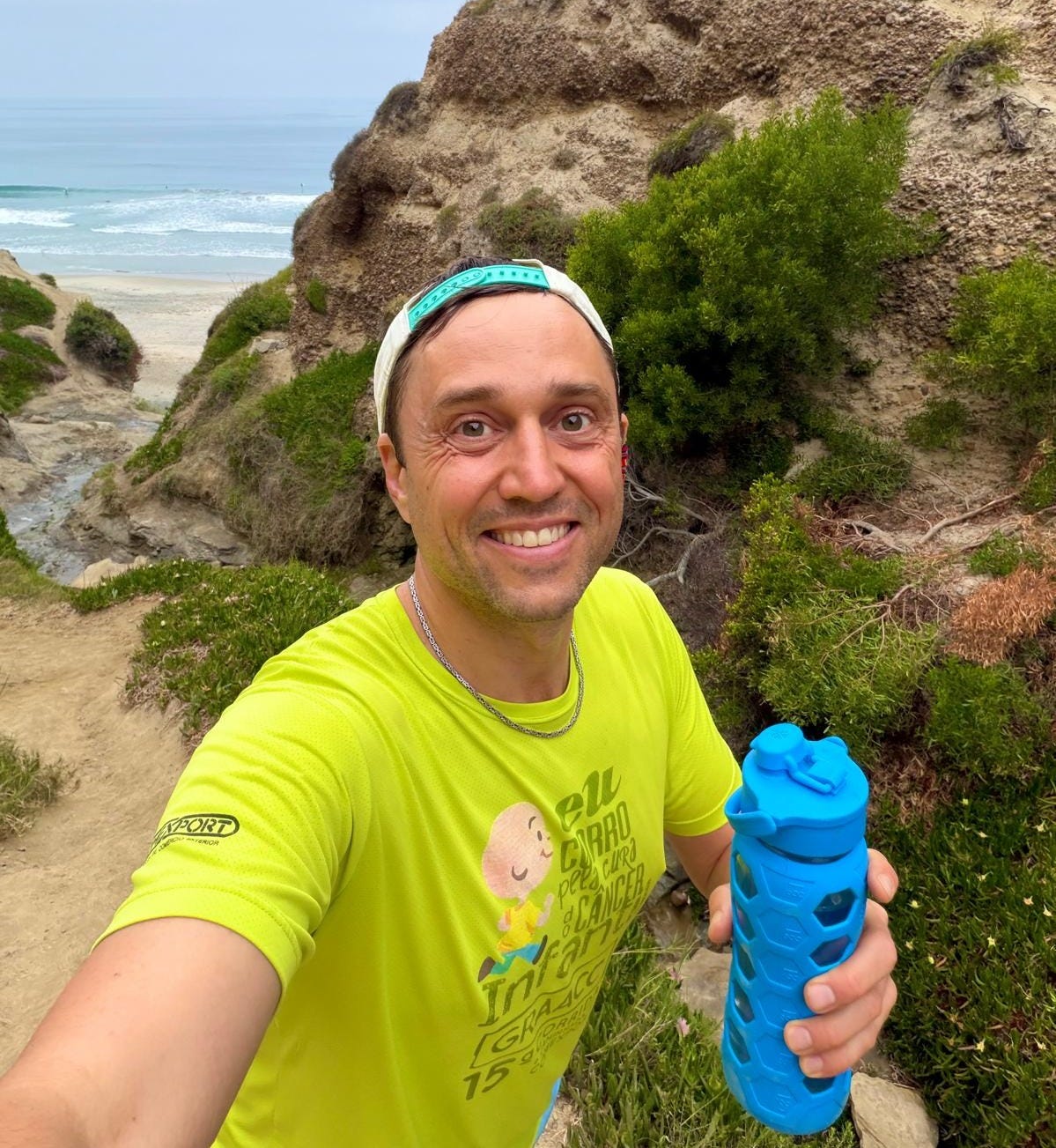
Luke Barbara and I met years ago at Ohio State through the Business Builders Club.
Since then, his work has taken him through Brazil, manufacturing, supply chain, and physical products.
At 42, Luke feels like he’s entering what he calls his “solo album” chapter: building something that is finally his, without sacrificing the spiritual practice, health, and relationships that make the work worth doing.
1 –– WORK
How would you describe your relationship with work?
I was raised not in a business family, but my mother is a nurse and my father is a physician. That influenced me to really value work, to view it as important, and to view it as service, as a contribution to society.
It’s really important to me that my work is somehow positively contributing to making the world a better place. I look at my mission as supporting and inspiring people to be happy, to be healthy, and to realize their higher potential.
I’m a big believer that people and the planet come before profits.
I’m interested in how a company can be an incredible place to work where we can express our creativity. How can work be something we do not just to pay our bills, but something that allows us to express the highest aspects of our nature, our higher potential, and then also to positively contribute to making the world a better place?
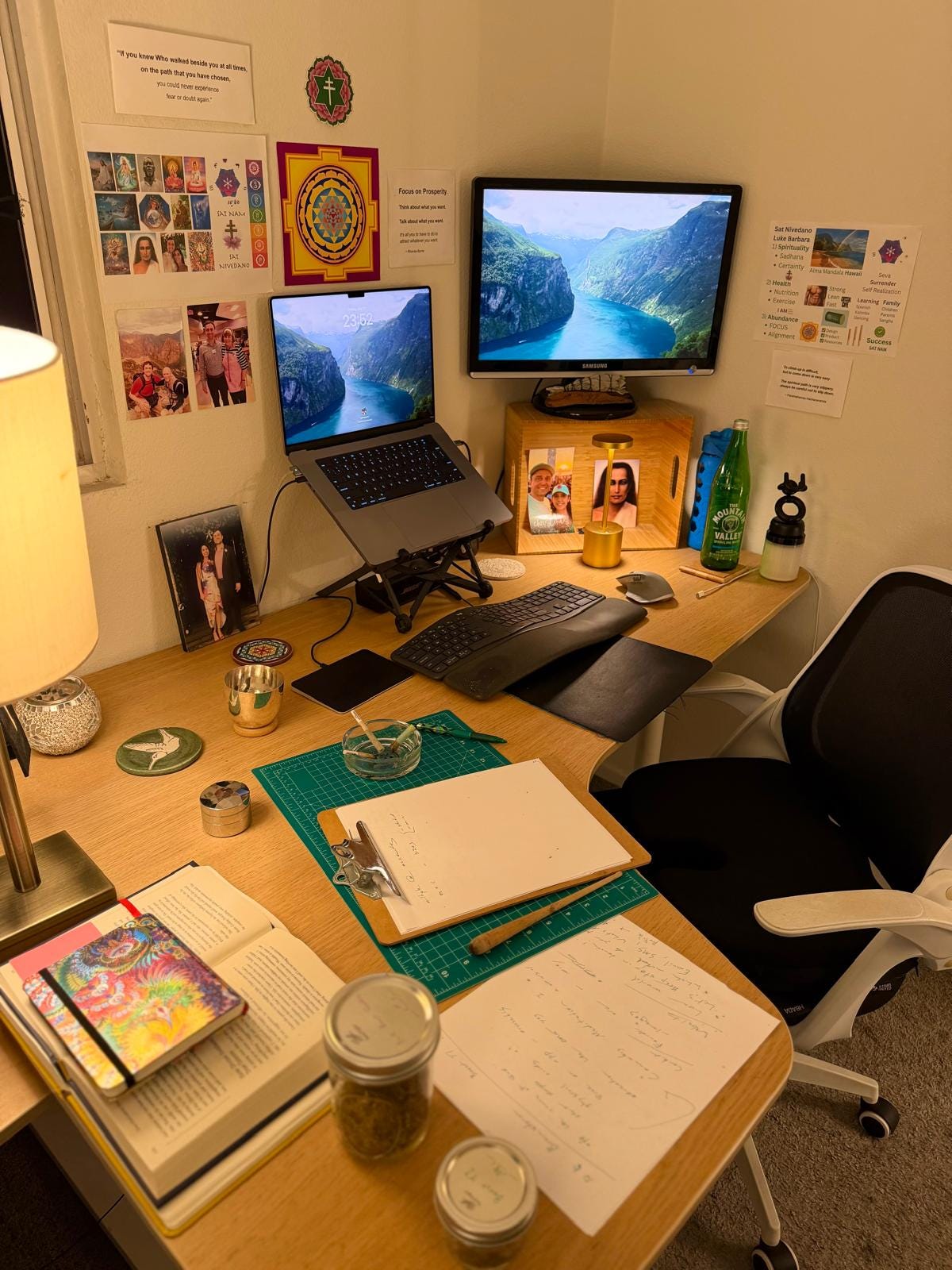
Was there a specific moment you changed your whole approach to work? If so, what was the moment?
I had some transformational experiences somewhere between high school and university.
I ended up living in Central America in the context of a volunteer organization in Honduras. I had a role where I did not sit at a desk, where I was not in an office.
That was a transformational experience for me, learning that there are different types of work. Even though that wasn’t my ultimate calling, it opened my mind as I went back into university and back into my studies.
Another formative experience was after I graduated from Ohio State and moved to Brazil. I was lucky to work with an entrepreneurial family, a family group of businesses, and I was able to see a different perspective on work as an alternative to the classic career path.
You can bootstrap a company, and then you can wholly own and control that company. You could potentially pass that on for generations or sell it if you want. Both of those experiences happened outside of the country.
2 –– WEALTH
What’s been one of your greatest investments? Interpret however you would like.
The investment that I’ve made in my self-knowledge, and in my health. And thinking about that in terms of the dimensions of health, of being physical, mental, emotional, and spiritual.
And specifically, what comes to mind is that work related to releasing what is not in service of my happiness, my health, and the realization of my higher potential and bringing in more of what is.
What’s something you have learned about money that you wish you had known earlier?
One thing I wish I would have learned sooner, although I also believe everything comes at the right time, was the difference between a mindset of abundance and a mindset of scarcity.
I had experiences, primarily seeing the parents of my friends and how they interacted with money, where they had more of an entrepreneurial view.
It wasn’t so limited by, “This is the salary and this is what we’re working with.”
It was, “If we want to do more, if we want to buy something beyond what we’re making right now, let’s figure out a way to make that additional money.”
I believe that if I’m living and working in alignment, and my free will is aligned with the divine will, and I’m doing what God wants me to do, the resources are going to come.
There are times when I need to remind myself of that and correct my thinking. If I find myself falling back into a scarcity mindset, I shift it back to abundance.
Rather than worrying about why things won’t work, why don’t I think about how things could work and remove the limitations?
I’ll start worrying about something and come back and ask, “Why am I using my mind to worry?”
I believe that the abundance mindset is a powerful shift for how we think about life, our work, how we approach deals, and pretty much every aspect.
3 –– WELLNESS
How do you disconnect or unplug from being online?
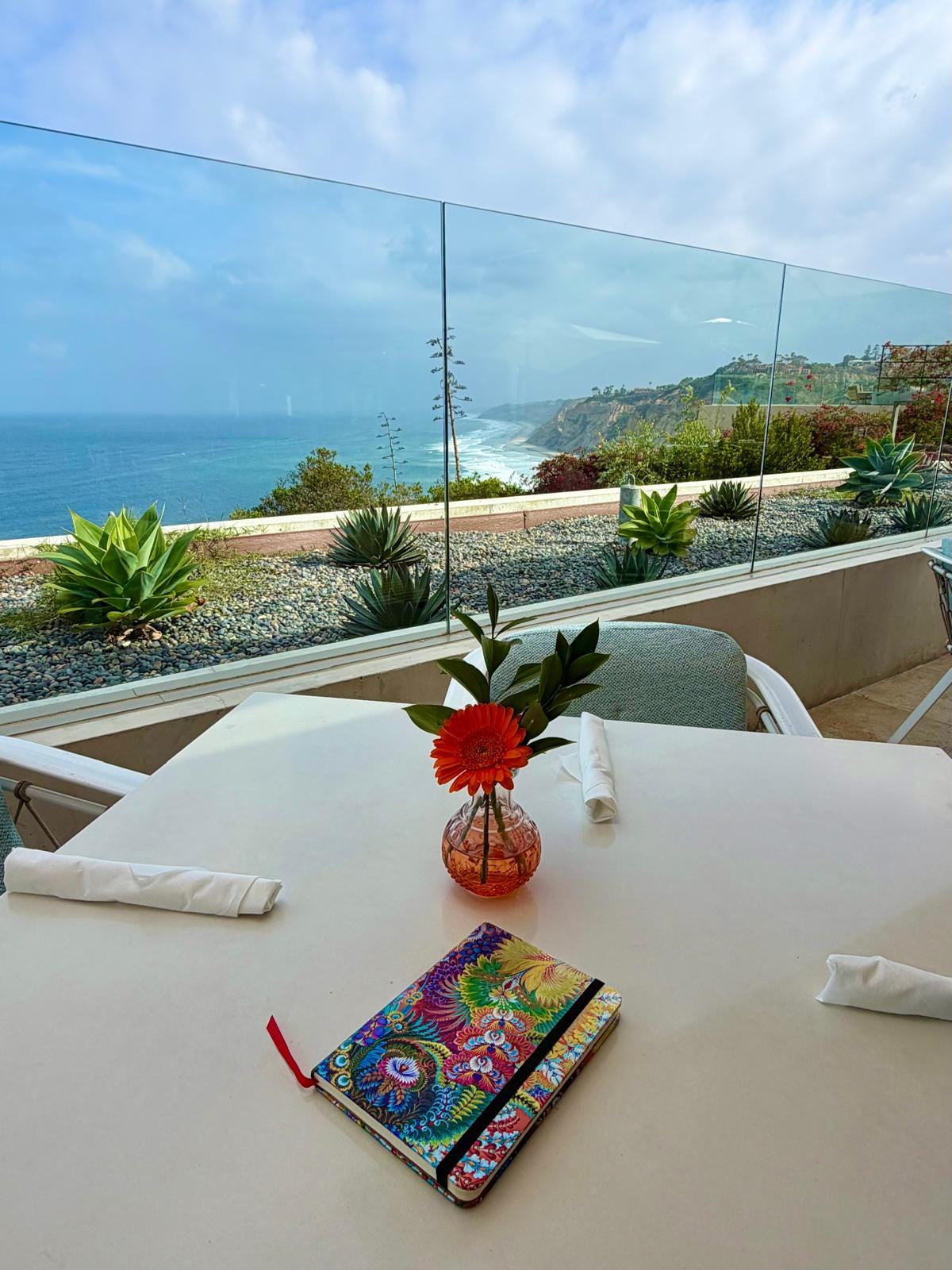
Taking care of myself and feeling aligned with my purpose oftentimes involves taking a step away from work, learning to retreat, going on a vacation, or not working some weekends, even though I do on a lot of them.
Rather than spending three more hours grinding, I go for a hike at Torrey Pines.
Things have a way of figuring themselves out. Ideas and insights come.
Is there a practice, tool, or teaching you use or follow regularly?
On the simplest level, I’m a big believer in the power of affirmations and mantras.
There are ways that we are programming our minds. Sometimes I find myself ruminating on something: “Why did I do that?” or “What if I would have done this differently?”
Then I catch myself and say, “Why am I spending my time thinking about this right now?”
It’s the practice of observation, not identifying with my thoughts, and realizing that I am not my thoughts.
I would fundamentally disagree with Descartes: “I think, therefore I am.” I am, and I think, and it doesn’t always serve me. If I start having thoughts of fear, doubt, scarcity, lack, or anything negative, I replace that with something positive.
You can battle your negative thoughts, and you might even win, but you expend a lot of energy in that process. I have found the most effective way is to short-circuit that negative thinking and introduce something positive.
An affirmation can be the simplest way to do that. It could be a word like “abundance” or “love,” or, “Everything’s going to work out,” or, “You got this.”
Do you have any spiritual or self-development practices?
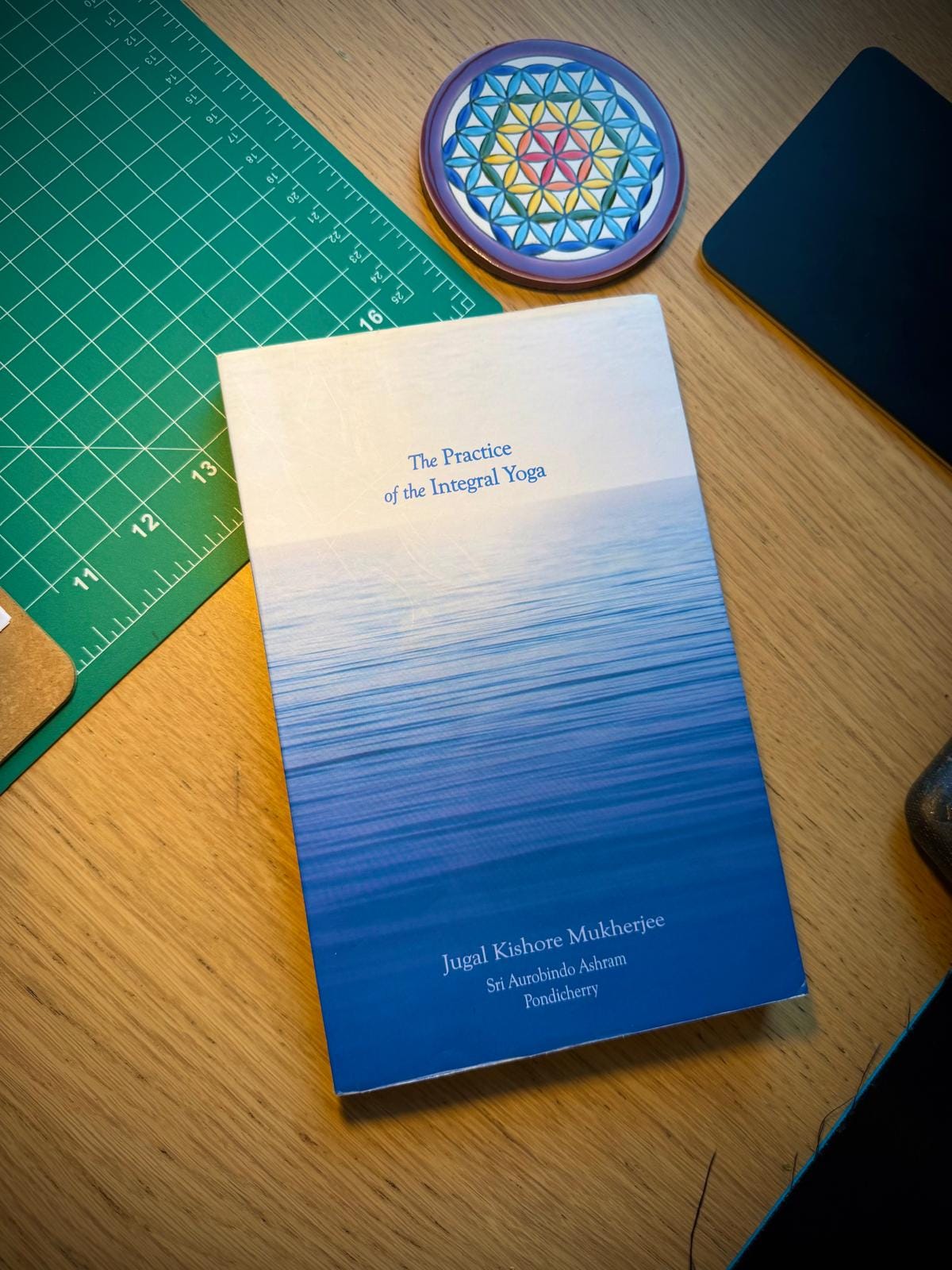
Yoga was instrumental and continues to be in my life.
That’s a combination of the asanas, the postures, pranayama, the breathing exercises, and meditation. A lot of people think the postures are yoga, but yoga is actually union.
Yoga is a very sophisticated, yet also very simple, system for optimizing human potential.
I have huge gratitude for plant medicines. I would say that the work with yoga and meditation is as important, or perhaps even more important.
The conjunction of those, together with studying different wisdom traditions, religions, and spiritual paths, has been important. I take what is useful without getting caught up in the dogma and the things that don’t necessarily resonate with me, and integrate these into my toolkit, into my own unique approach that supports me in my life and my work.
4 –– WISDOM
Who are your go-to sources for good information that most people do not know about?
The first person who comes to mind is Caleb Ralston, who is focused on the realm of personal branding.
Caleb worked with Gary Vaynerchuk to grow Gary V’s TikTok following, and my understanding is that he worked with Alex and Leila Hormozi, pretty much from scratch, to build their personal brands.
I learned about Caleb’s work through our mutual friend Jay Clouse, who does awesome work with Creator Science.
I really like how Caleb frames the power of the personal brand in a very practical way. He describes why it’s important, why it’s powerful, why it’s not cheesy or corny, and how, now more than ever, there is this unique opportunity to create content and build a personal brand in a way that’s very authentic, sincere, and even vulnerable.
What are you currently reading, watching, or listening to that is shaping how you think?
I’ve been studying creators like Gary Vaynerchuk, the Hormozis, and Gabby Bernstein, people who have these major personal brands.
As things become increasingly artificial and digital, and we don’t even know what’s real anymore, we’re all pretty skeptical of people and corporations. Trust is maybe at an all-time low, and it’s probably only going to get lower with the way things are going with AI.
The opportunity is to really lean into being human, creating content, and building a personal brand.
I have a lot of gratitude for everything Caleb is sharing. I feel that he has empowered me with inspiration and encouragement, and also very practical knowledge about how to do this in a way that aligns with your values and supports the work you’re doing.
There’s also the work of Rhonda Byrne with The Secret and The Magic, this practice of manifestation and visualization.
In the business context, I’m a big fan of the work of Cameron Herold with Vivid Vision, painting this 3D picture of my venture and what I’m working to manifest in my business and my life projects, and coming back to that.
5 –– WHAT’S NEXT
What are you practicing right now that you are still bad at?
Building my personal brand is a deep process of putting myself out there. I’ve been consistently creating at least one short-form, selfie-style video per day and posting even more than that, building that muscle of showing up online every single day.
At that level of volume, I’m not going to record it 10 times. I tend to do one take, and then I post it. I get the idea of what I’m going to talk about, and then I put it out there.
It’s interesting because I’m vulnerable. There might be a day where I’m thinking, “I look kind of tired today.” I’m still going to post it. Someone Jay Clouse had on his podcast calls it “climbing cringe mountain.”
Caleb says, “We don’t really know what good content is. The algorithm figures it out.”
I feel myself getting better at it, and I feel myself becoming more creative.
In one paragraph, what does your next chapter look like?
There’s a moment in Michael Jackson’s career where the Jackson 5 had hit this commercial success, but Michael realized, “It’s time for me to do my solo album.”
I would say that that’s my moment right now.
I’ve been involved in many different ventures, even some where it was primarily me driving it, but they all had some kind of partner in one way or another.
Now, in my current phase of work, I’m inspired that I’ve been creating something that is mine. It’s my creation. It’s my invention.
It was a process of developing a physical product, going from prototyping to patenting that product. It is a patent-pending invention to enhance the cannabis consumption experience: a filter that makes smoking smoother, cooler, and tastier.
I’m building a brand around that focused on mindful consumption, high performance, and an activated lifestyle.
It brings together my unique experiences in manufacturing and supply chain, my background in chemical engineering, applying my fluid dynamics coursework to something I actually care about. It also promotes the mindful consumption of cannabis.
I feel really grateful that I’m at this unique moment in my life where I’m 42 years old.
I feel like I’m just hitting my stride, like I’m just getting started.
People and resources mentioned:
Torrey Pines · Caleb Ralston · Gary Vaynerchuk · Alex Hormozi · Leila Hormozi · Jay Clouse · Creator Science · Gabby Bernstein · Rhonda Byrne · Cameron Herold and Vivid Vision
Rooftop –– Want to ride with us?
I’m building The Elevator around 100 founders creating lives bigger than their businesses. If Luke’s story made someone come to mind, send this to them.